PetrolPal is the best UK petrol price comparison tool for a no-account price check and fuel-aware route planning. PetrolPrices is strongest for community features, while the AA and myRAC suit drivers already using those motoring apps. Waze is useful during navigation. Google Maps remains a station finder, but our September retest did not show pump prices consistently enough to recommend it for comparison.
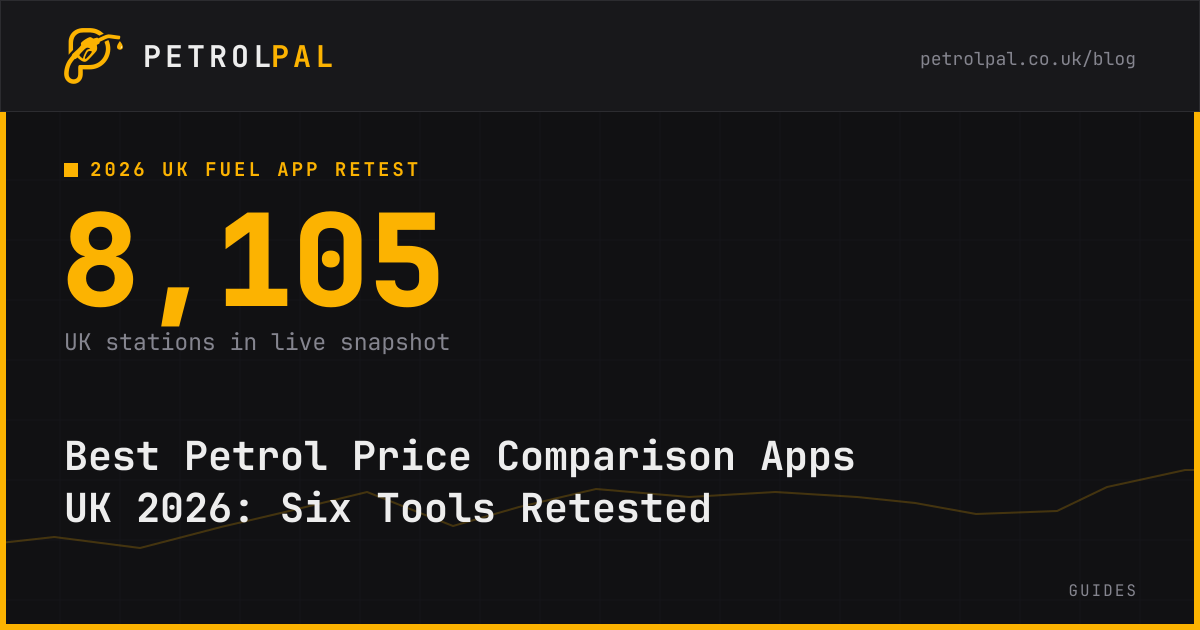
The shared data foundation has changed. On 5 September 2026, PetrolPal showed 8,105 UK stations, with petrol averaging 164.0p per litre and diesel 186.1p. The important difference is now how each service presents current Fuel Finder data, shows timestamps, handles routes and asks for personal data.
What changed when Fuel Finder replaced the old voluntary scheme?
The original version of this guide incorrectly said a government transparency scheme took effect in late 2023. The 2023 service was an interim voluntary scheme. It closed on 1 May 2026. The permanent statutory Fuel Finder service launched on 2 February 2026, and the CMA began prioritising enforcement from 1 May. Source
Fuel Finder requires motor fuel retailers to register and report price changes within 30 minutes. Its service gives third parties current prices by fuel type, forecourt details, amenities, opening hours and update timestamps. Source
This change removes much of the old coverage advantage held by established databases. Apps can now start from the same official national feed. They still differ in refresh schedules, caching, location search, filters and error handling. A retailer can also report an incorrect value, or a comparator can briefly show an older cached result. Always check the pump display before buying.
The government does not provide a general consumer app in place of these services. It publishes data for apps, websites and other users. Drivers must therefore choose an interface that fits their journey.
Which UK petrol price tool is best for most drivers?
Choose PetrolPal if you want a quick web search, visible price freshness, no adverts and no account for basic comparison. It combines fuel stations and EV chargers. Its route planner can add fuel stops based on tank size, fuel level, economy and a route corridor. Source
Choose PetrolPrices if you value community features. Its current service supports fuel and brand filters, cheapest or nearest sorting, saved filters, facilities, forecourt reviews, user price confirmation and a virtual garage. Source
Choose the AA app if it already handles your breakdown cover, reminders or routes. The AA says users can compare nearby fuel prices, save a favourite location, find EV chargers and check charger availability. Source
Choose myRAC if you want fuel search inside the RAC service. RAC says registered users, including non-members, can search within two, five or ten miles. Its Fuel Watch page also provides national price context and daily monitoring. Source
Choose Waze if you want prices during active navigation. Waze lets users confirm or edit station prices. Its UK community also reports an automatic update mechanism for about 8,000 stations, so the old claim that it relies entirely on crowdsourcing is no longer fair. Source Source
Do not choose Google Maps alone for a deliberate price comparison. Our Manchester web retest found petrol stations, opening hours and directions, but no consistent pump-price field across the results. Source
How did the six services perform in our September retest?
| Tool | Best use | Account for basic price search | Route or navigation role | Main trade-off |
|---|---|---|---|---|
| PetrolPal | No-ad fuel and EV comparison | No | Fuel-aware route planner | Native mobile apps are still coming soon |
| PetrolPrices | Filters and community detail | Web map opens without sign-in | Search by current area or destination | Search limits and commercial offers appear in the service |
| AA app | Existing AA users | App-led service | Route and traffic tools | Fuel is one feature inside a larger app |
| myRAC | Existing RAC users | Registration required | Nearby radius search | Fuel is one feature inside a larger app |
| Waze | Checking fuel while navigating | Google or Waze account normally used | Full navigation | Price display depends on station and app context |
| Google Maps | Finding stations and directions | No for limited web view | Full navigation | UK pump prices were not consistently visible |
PetrolPal's strongest difference is not exclusive access to prices. It is the way fuel search connects to a route. A nearby cheapest result is not always useful if it sends you backwards or adds a long diversion. PetrolPal can search a corridor from one to five miles around the route and export selected stops to Google Maps or Apple Maps. Source
PetrolPrices offers deeper community interaction. Users can update prices, confirm existing values and leave forecourt reviews. It also lists facilities and lets drivers save filters. The web map displayed a daily search-limit warning during our inspection, stating that stations remain visible after the price limit is reached.
The AA has corrected another stale claim from the old article. Its official page now says the app finds both fuel and EV chargers. Fuel comparison is still part of a broad motoring product, but it is not fair to describe its EV coverage as absent. Source
The RAC now deserves its own place in the comparison. Fuel Watch provides useful national analysis, while the free myRAC app offers local search to registered users. This makes it a practical choice for drivers who already use RAC services. Source
Waze also needed a correction. Users can still confirm and edit prices, but the UK service is not purely dependent on local reports. The reported automatic station update mechanism should improve baseline coverage. Community reports can still help when a forecourt changes a price or an automatic record is missing.
Google Maps found the stations in our test and remained excellent for directions. However, a list of places is not a price comparison. Until UK price labels appear consistently, open a specialist service before choosing where to fill.
Which service gives the clearest view of data freshness?
A current-looking number can still be old. Look for a timestamp attached to the individual station price, not only a page-wide statement such as “live” or “updated today”. Fuel Finder supplies update timestamps, but each comparator decides how to show them. Source
PetrolPal shows when station prices last changed and refreshes its official feed hourly. Its 5 September snapshot was last synced at 03:03 UTC. The public summary then contained 8,105 stations and 7,863 unleaded price records. Source
PetrolPrices allows community confirmation and updates. That can correct a changed forecourt quickly, but a user submission is a different evidence path from an official retailer report. The service says its prices come from several sources, including stations themselves. Source
Waze exposes user confirmation and editing. This is useful when the displayed price differs from the forecourt. It also means drivers should check who updated a value and when, where the app shows that detail. Source
No service can guarantee that every displayed number matches the pump at every moment. The CMA warns that delays can occur between a forecourt setting a price and a comparator displaying it. Check the price board before committing to a fill. Source
How much can comparing fuel prices save today?
PetrolPal's 5 September dataset put the average supermarket petrol price at 161.12p per litre. Branded forecourts averaged 165.66p, a difference of 4.54p. On a 55-litre fill, that gap is about £2.50. Source
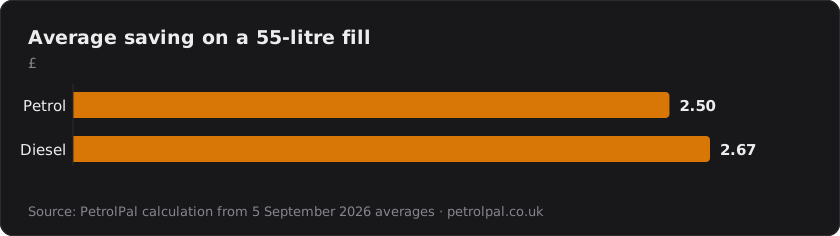
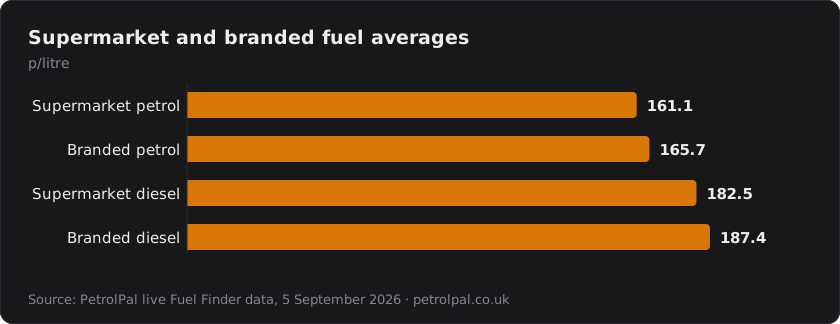
For diesel, supermarkets averaged 182.51p and branded sites averaged 187.37p. The 4.86p gap equals about £2.67 on 55 litres. These are national group averages, not a promise that the nearest supermarket always wins.
A small local difference can still matter. A 3p-per-litre saving is £1.65 on 55 litres. A 6p difference is £3.30. Multiply the difference in pence by the litres bought, then divide by 100 to get pounds.
Do not erase the saving with a long detour. Compare stations already near your route. Consider traffic, distance, membership requirements and whether you need premium fuel. A lower advertised price is poor value if the return trip burns most of the saving.
Which tool asks for the least personal data?
PetrolPal allows basic map, regional and route searches without an account. It says browser location is processed in real time and not stored on its servers. Analytics is opt-in. Accounts add favourites, saved routes, a garage and alerts. Source
PetrolPrices also provides an open web map, but its wider service includes accounts, vehicle details, offers, reviews and saved filters. Its privacy policy lists identity, contact, technical, profile, usage and marketing data categories. Read the policy before enabling optional features. Source
The AA and RAC combine fuel comparison with membership, breakdown and vehicle services. That can reduce app clutter for an existing customer, but it places the fuel check inside a broader account relationship.
Waze and Google Maps sit inside Google's navigation products. They make sense if you already accept that account and location model. Drivers who only want a price check may prefer a browser tool that works without sign-in.
Privacy is not a single badge. Check whether basic search requires an account, whether location is stored, whether analytics is optional and whether the service uses data for advertising or offers.
What should you check before driving to a cheaper station?
First, check the individual price timestamp. A page-level update time does not prove that one station changed recently.
Second, confirm the fuel grade. Standard petrol, premium unleaded, diesel and premium diesel can have very different prices. Do not compare E10 with E5.
Third, check the route cost. A £2 saving may not justify a congested ten-mile round trip. Use a route-aware tool or choose a station already on your journey.
Fourth, check access conditions. Some low-price forecourts require membership, restrict payment methods or sit inside locations with limited hours.
Finally, read the pump and price board. The amount displayed at the forecourt is the amount that matters at purchase.